Object Oriented Programming with Python

Are you a beginning Python programmer that wants to prevent spaghetti code by organising code better? Do you often have to work with unstructured code that is hard to understand?
Or are you a developer that brings experience from other programming languages and want to learn how to use OOP in Python?
Then this course is for you!
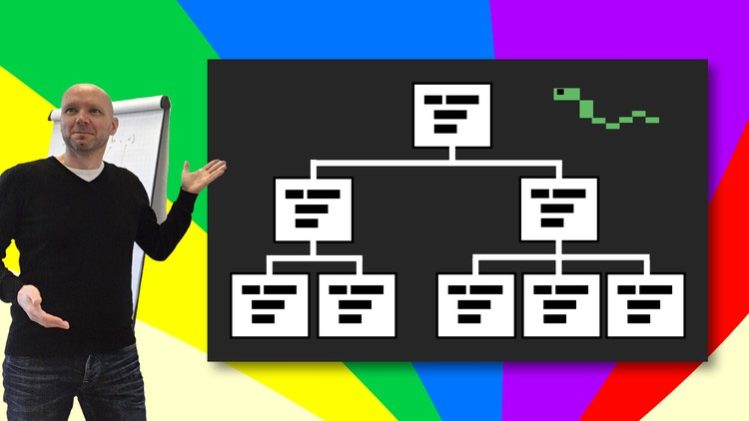
The ‘Object Oriented Programming with Python’ course takes you on a journey starting with a small, naive approach that gradually is turned into a well structured Object Oriented Design. Each step of the journey introduces new challenges, communicates intended changes with UML and uses tools from the OOP toolkit to solve problems.
After this course, you:
-
can execute Python programs on your computer after installing and using the required software.
-
can describe OOP by its official definition, its features and the recognition that OOP features play a main role in building robust dependency trees.
-
can group data in objects by using the concept of classes.
-
can visualise code in UML class diagrams once you write, read and adapt the UML.
-
can refactor growing code and make it more readable by structuring it into new modules.
-
can use encapsulation after categorising class attributes by their visibility and create helper methods.
-
master decoupling by injecting dependencies when objects are instantiated.
-
can extend existing code with minimal changes, by using polymorphism.
-
can avoid an explosion of subclasses by assessing when composition should be favoured over inheritance and how to apply it.
-
can test your own code for correctness, by creating and executing unit tests.
Course length
2,5 hours
Required skill level for taking course
Beginner level knowledge of Python, or another programming language.
Target audience
-
Beginner Python developers who want to organise their code better by using OOP.
-
Developers that bring experience from another programming language who want to learn using OOP with Python.
Related Courses